Defense Secretary Gilberto Teodoro Jr. said U.S. military assets and personnel are playing a crucial role in on-going relief efforts for communities hit hardest by the back-to-back onslaught of Typhoons Fung-Wong (Uwan) and Kalmaegi (Tino), adding that Washington’s help goes far beyond the humanitarian funding it provides.
Teodoro and U.S. Ambassador MaryKay Carlson visited Clark Air Base in Pampanga on Saturday to meet with Filipino and American service members involved in staging and delivering thousands of family food packs to affected areas, including Catanduanes. The visit highlighted the long-standing cooperation between the Philippines and the United States in humanitarian assistance and disaster response.
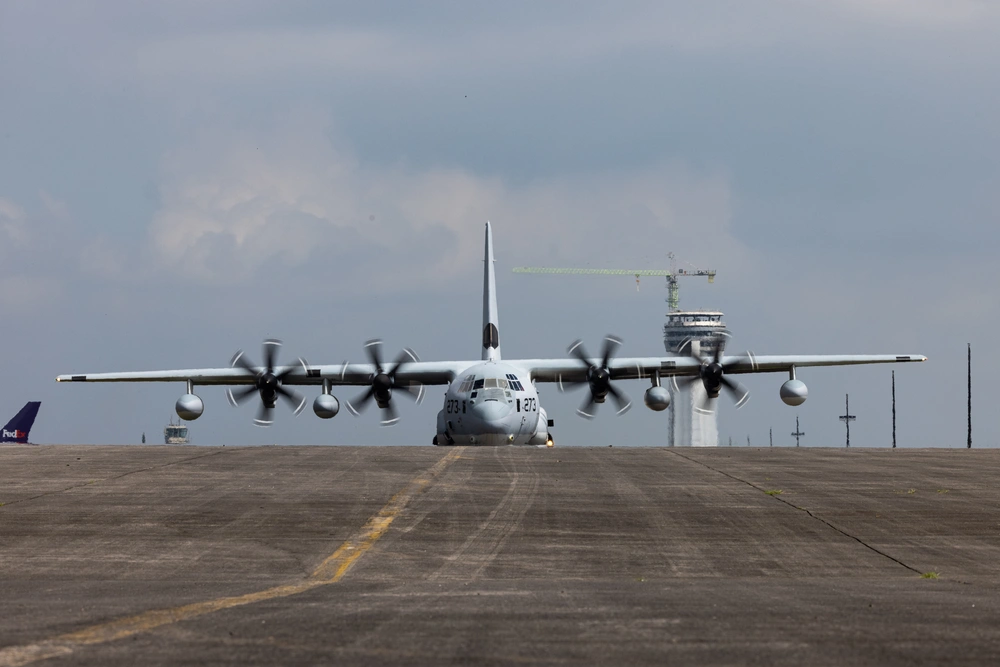
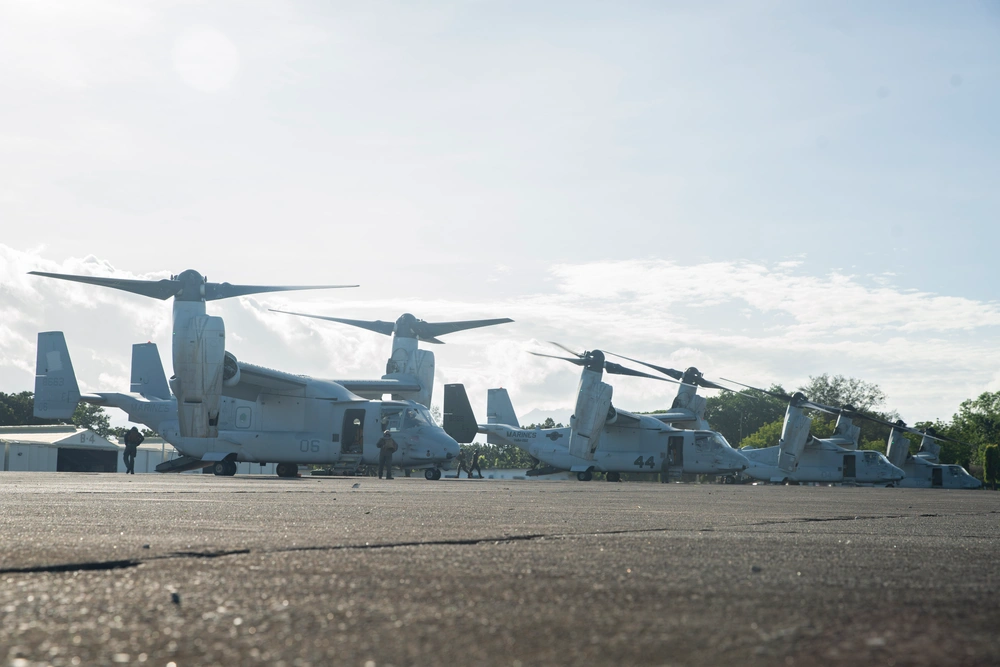
Teodoro emphasized the value of U.S. military airlift capabilities– particularly the V-22 Osprey and C-130J– which can reach remote and cut-off communities more efficiently.
“Those Ospreys, the vertical lift ones, will help our Black Hawks palletize,” he said. “With the Black Hawks you need to take these out of the pallets and load them individually. With the V-22, this can go in already as a whole,” Teodoro said.
“So don’t look at the dollars,” he added, stressing that the most important contributions are the “unquantifiable” ones– expertise, manpower, aircraft, time, and coordination behind the operations.
Carlson echoed Teodoro, calling the U.S. military presence an intangible but essential part of Washington’s response.
“This effort is a testament to the strong ties between our two countries,” Carlson said. “We’re proud to stand with the Philippines as a trusted friend, partner, and all.”
She noted that U.S. disaster teams have worked with their Philippine counterparts since 2009, a partnership that helped authorities evacuate more than one million people ahead of the storms. She also applauded the Philippine government’s response, saying the proactive measures undoubtedly saved countless lives and exemplify the strength of the Philippines’ disaster management capabilities.”
Carlson cited personnel involved, including U.S. Marines from Marine Forces Pacific (MARFORPAC), Airmen from the Pacific Air Forces (PACAF), Special Operations Command Pacific, (SOCPAC), the Joint U.S. Military Assistance Group (JUSMAG) led by Col. Dan Oh, the State Department’s Regional Foreign Assistance Office, and other embassy representatives.
She also announced an additional $1.5 million (P87 million) in emergency assistance, bringing total U.S. support for the typhoon response to $2.5 million (P145 million), covering logistics, emergency shelter, water, sanitation, and the management of evacuation centers. These funds are separate from U.S. military resources.
Teodoro said the deployment costs alone are “huge,” yet the United States commits them”unhesitatingly” as a demonstration of goodwill.
“I’m sure, in the same way, Filipinos will also reciprocate unhesitatingly as we build resilience in the United States,” he said. “We have a valuable ally. We have other valuable allies, too. And we continue to add to these sustaining friendships every day. This is merely a demonstration of how far we’ve come . . . (and) behind this is a daily interaction, daily exchange, that we pledge to make stronger and better for the benefit of both countries and our region.”
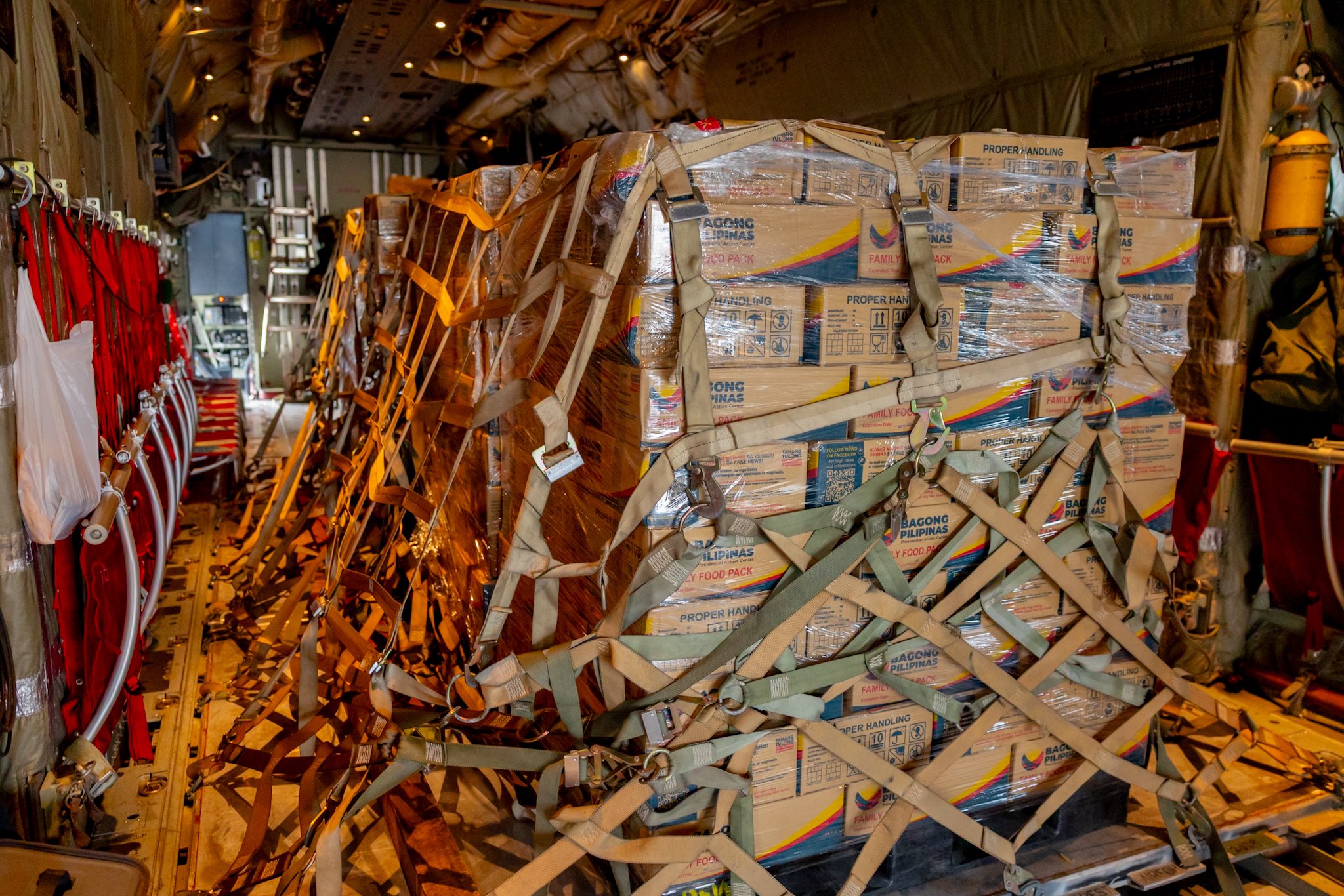
The Department of National Defense said that as of November 15, the Department of Social Welfare and Development had allocated 10,000 family food packs (100 pallets) for Catanduanes. Of these, 85 pallets or 8,500 packs have already been delivered to Virac, with the remaining 15 pallets en route.
About the Author