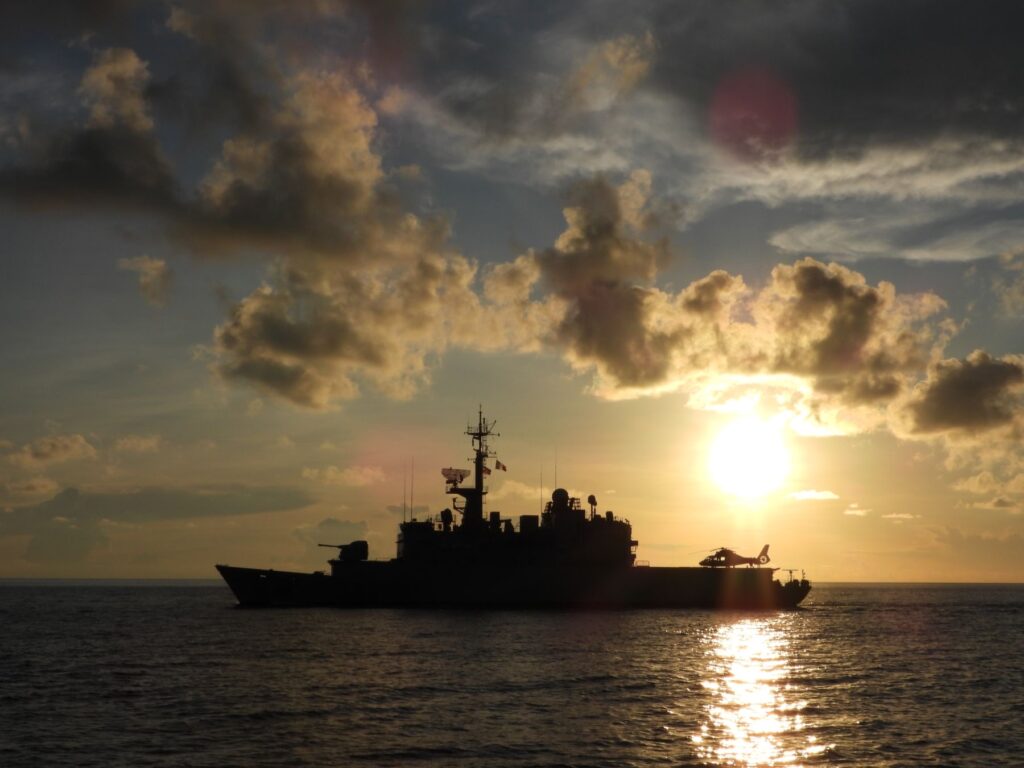
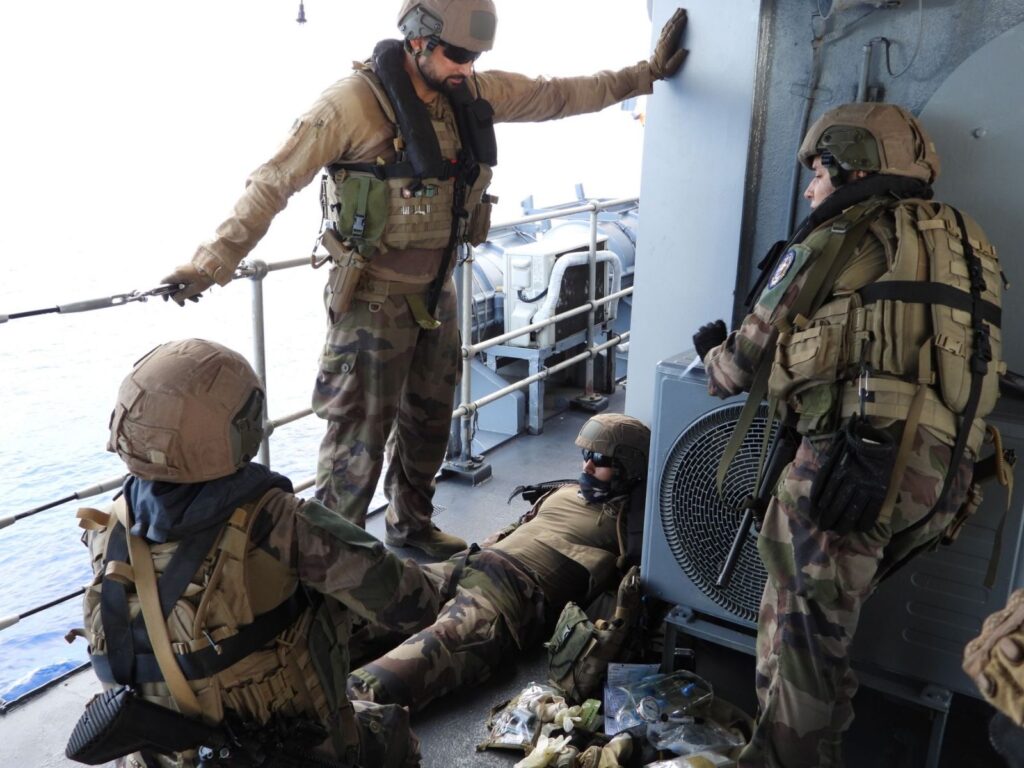
From November 26 to 28, the Philippines and France carried out a bilateral Maritime Cooperative Activity (MCA) in the waters off Eastern Mindanao, highlighting the deepening defense relationship between the two nations.
The Philippine Navy, through Joint Task Force Sinaya, deployed BRP Artemio Ricarte (PS-37), patrol vessel NV392, and supporting air assets, while the French Navy contributed a frigate and a naval helicopter.
Proposed by the French Embassy, the activity was designed to enhance interoperability, improve maritime domain awareness, and build operational familiarity between Philippine and French forces.
Commodore Ireneo Batung, commander of Naval Forces Eastern Mindanao (NFEM), said the exercises were held in the strategic waters south of Balut Island, Sarangani, extending toward Davao Oriental—a corridor vital to maritime trade and national security.
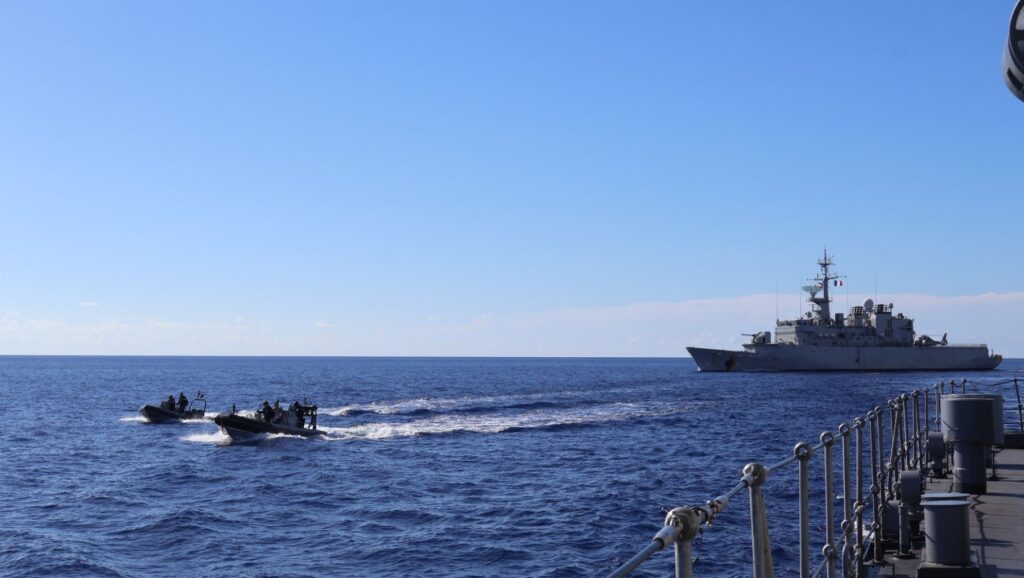
The drills included Combined Visit, Board, Search, and Seizure (CVBSS) procedures, maneuvering exercises, ship control approaches, and flashing exercises. Division Tactical Maneuvers, Officer-of-the-Watch drills, and Replenishment-at-Sea operations were also conducted, providing crews with practical experience in complex maritime operations and sustained coordination at sea.
The MCA underscores the broader trajectory of Philippine–French defense engagement. Beyond naval exercises, both countries have increasingly focused on maritime security, sustainable resource management, and promoting a rules-based order in the Indo-Pacific.
France brings expertise in naval operations, maritime law, and oceanography, while the Philippines contributes strategic geography and active regional engagement. Together, the partnership strengthens operational capabilities and supports responsible governance of regional waters.
Officials said the exercise strengthened mutual trust and coordination between the two navies while advancing regional stability.
For the Philippines, it reflects a continued commitment to international defense cooperation. For France, it demonstrates its active role in Indo-Pacific security and its willingness to work with regional partners to uphold maritime rules and security.
About the Author