The Department of Environment and Natural Resources (DENR) has reported signs of coral recovery at Snake Island in Honda Bay, Puerto Princesa, Palawan.
According to the DENR’s Ecosystems Research and Development Bureau (ERDB) – Coastal Zone and Freshwater Ecosystem Research Division (CZFERD), coral cover in Snake Island has steadily increased nearly a decade after the 2016 bleaching event.
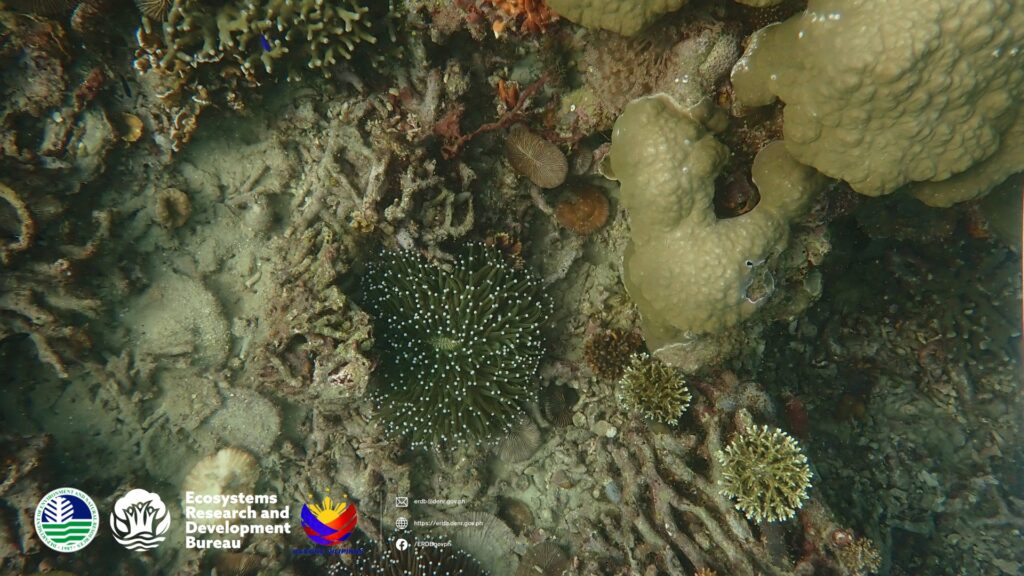
While the reef has not yet returned to its baseline state, observations from the October 2025 survey indicate that recovery is underway.
Aleisa Hannh Ayson, Science Research Specialist of ERDB-CZFERD, said that comparing the latest photos of Station 1 with those from 2016 shows new corals forming on top of dead ones, a trait of reef-building corals. These corals leave behind a hard skeleton that can provide space for coral recruits, provided it remains stable.
Researchers noted that although the process is gradual, the upward trend in coral cover reflects the reef’s natural resilience when exposed to fewer stressors.
Coral bleaching occurs when elevated sea temperatures, typically 1–2°C above normal, stress corals, causing them to expel the symbiotic algae that provide color and nutrition. Prolonged heat, pollution, and intense sunlight can lead to coral starvation and death.
Snake Island was first assessed by ERDB in 2016 during a major bleaching event. It was declared a National Coastal and Marine Center for Research in 2011 and closed to tourists in 2012 to prioritize scientific research.
The department emphasized that long-term protection and science-based management are essential, noting that coral reefs sustain up to 25 percent of marine species, support livelihoods, enhance tourism, and serve as natural barriers that dissipate up to 90 percent of wave energy.
DENR also urged the public, particularly coastal communities and marine visitors, to help safeguard coral reefs by reducing pollution and avoiding destructive practices.
About the Author