Photo courtesy: Philippine Embassy in The Netherlands
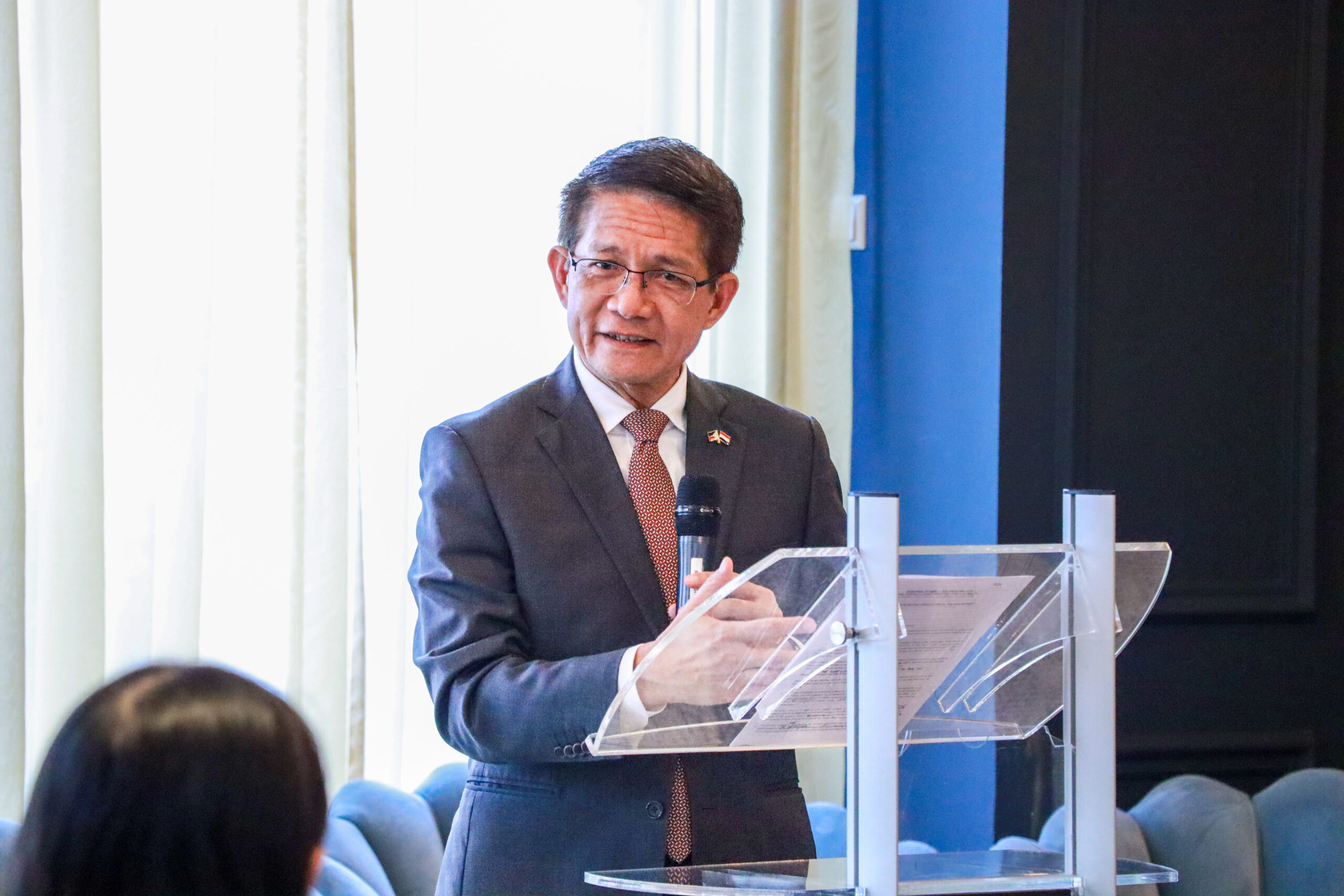
Philippine Ambassador to the Netherlands Eduardo Malaya welcomed the inclusion of Manila in the 30 Cities Program of The Ocean Cleanup (TOC), a Rotterdam-based non-profit organization leading global efforts to reduce ocean plastic pollution.
During a diplomatic briefing organized by TOC on October 30, Malaya said the Philippine Embassy is pleased that the organization is “bringing its science-based solutions and impactful programs to the Philippines.”
“We look forward to the finalization of arrangements with Philippine agencies and hope to see soon the deployment of TOC Interceptors in the Pasig and Meycauayan Rivers and their tributaries,” he said, emphasizing the initiative’s potential to improve water quality and aquatic life while reducing plastic pollution in Manila Bay.
The Ocean Cleanup is currently working with the Department of Environment and Natural Resources (DENR) and the Municipality of Meycauayan, Bulacan, to develop plans for capturing plastic waste in major river systems.
The group is conducting preliminary research and data analysis in Manila and Cebu to identify technology-based solutions, with Energies PH assisting in early engagement efforts.
The Netherlands-based organization launched its 30 Cities Program at the UN Ocean Conference in Nice, France, in June. The initiative aims to deploy its Interceptor™ systems in 30 key cities across Asia and the Americas to eliminate up to one-third of all plastics entering the ocean from rivers by the end of the decade.
Malaya highlighted the Philippines’ severe plastic pollution problem, citing the country’s high consumption of single-use plastics such as sachets for personal care and food products. These, he said, account for about three-fourths of household waste nationwide and are neither compostable nor recyclable.
He urged the use of sustainable packaging alternatives and paper grocery bags, noting that plastic bags take years to degrade.
He also cited the government’s ongoing efforts to address plastic pollution, including the Ecological Solid Waste Management Act (RA 9003), the Extended Producer Responsibility Act of 2022 (RA 11898), and local ordinances promoting environmental sustainability.
Malaya added that the Department of Foreign Affairs continues to support the early conclusion of a Global Plastic Treaty that seeks to drastically reduce plastic use worldwide.
Established in 2013 by Dutch inventor Boyan Slat, The Ocean Cleanup is currently active in eight countries, including Vietnam, Thailand, Malaysia, and Indonesia. Its technologies are being used to remove floating plastics from the Great Pacific Garbage Patch, which contains more than 100 million kilograms of marine debris.
About the Author