The United Nations Educational, Scientific and Cultural Organization (UNESCO) has inscribed Bohol’s centuries-old practice of making asin tibuok into its List of Intangible Cultural Heritage (ICH) in Need of Urgent Safeguarding.
The inscription was announced on December 9 during the 20th Session of the Intergovernmental Committee for the Safeguarding of the Intangible Cultural Heritage in New Delhi, India.
This is the first Philippine traditional food process to be included in any UNESCO ICH list.
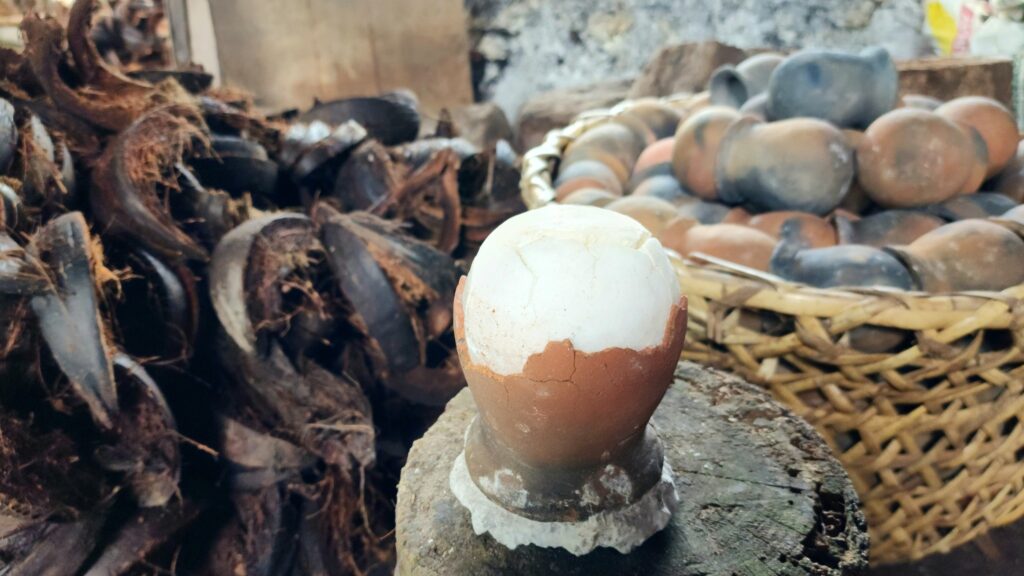
UNESCO describes asin tibuok as a “traditional sea salt made through a long and careful process originating from the Bohol Province,” noting that its final product resembles “a white egg inside a brown shell.”
The organization added that the practice is typically a family activity, with skills passed down through hands-on learning as children observe and assist their parents. Community groups have recently begun helping document and safeguard the tradition.
The artisanal salt is produced through a labor-intensive process using natural materials and techniques transmitted across generations of Boholanos. Coconut husks are soaked in seawater for months, dried, burned and mixed with seawater to create brine. The brine is then boiled in clay pots until salt forms and hardens into its distinct egg-shaped shell. While the physically demanding work is often carried out by men, women also take part in cooking, cleaning and crafting the clay pots.
National Commission for Culture and the Arts (NCCA) Chairman Victorino Mapa Manalo said the inscription “honors the skill and devotion of our Boholano salt makers and affirms the centuries-old wisdom passed down through our ancestors.”
The National Museum of the Philippines likewise called the inscription “a well-deserved and long-overdue recognition” for the mang-asinay of Alburquerque, whose dedication has preserved the practice. It also highlighted the craftsmanship of local salt potters and reaffirmed its commitment to work with communities to sustain the industry.
The Philippines now has six elements inscribed in UNESCO’s intangible heritage lists, including the hudhud chants of the Ifugao (2008), the Darangen epic of the Meranaw (2008), the Punnuk tugging game of the Ifugao (2015), Aklan piña handloom weaving (2023), the Subanen ritual buklog (2019), and the School of Living Traditions (2021) in the Register of Good Safeguarding Practices.
About the Author